
- Dhaka


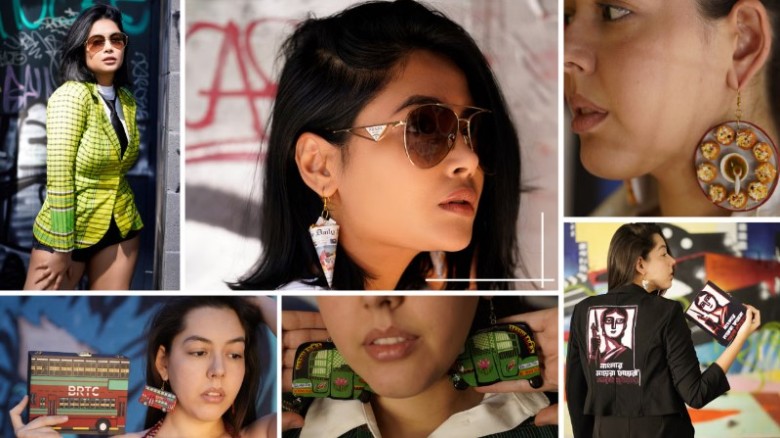

Fashion is a form of storytelling, and Priota Iftekhar is the storyteller. Once known as the "Flag Girl" for proudly waving Bangladesh’s red-and-green flag across borders, she is now gaining attention in Sydney, Australia, for her bold and cultural fashion choices.
Priota first became famous by traveling alone with the Bangladeshi flag in hand. This brave act challenged stereotypes and inspired a movement based on identity, freedom, and national pride. She also founded an online community called The Flag Girl.
“When I travel abroad, many people don’t realize I’m Bangladeshi,” Iftekhar says with a smile. “Most have never heard of Bangladesh and assume I’m from India. That’s why I decided to create things that show who I am and where I come from.”
She started The Flag Girl project in 2009, connecting people worldwide. Today, over 50 countries are part of this community, mostly young members. In 2018, she won the title of Miss Culture Worldwide. Now, she works as the director of Bangladesh Tourism Beauty, an organization that empowers women and promotes Bangladeshi culture globally.
Now living in Australia, Priota expresses her cultural identity through fashion. Her recent photoshoot, full of bright colors and familiar symbols, is a beautiful tribute to Bangladesh.
In one memorable look, she wore a tailored blazer made from gamcha—a simple checkered cotton cloth popular in Bangladesh. The fabric was sourced from Dhaka’s New Market and turned into a high-fashion piece.
Her accessories also told a story: earrings shaped like jhalmuri cones (a spicy Bangladeshi street snack), fuchka-inspired earrings, and a handbag designed to look like a double-decker BRTC bus.
These fun and creative pieces were made by “Sketch & Handmade Craft — Art Gallery.”
The photoshoot also featured international model Valeria Busch, wearing a dress by Media Ahmed Dipa with the strong message “Banglar mayera meyera shokolei muktijodhdha,” which means Bengali mothers and daughters are all freedom fighters. She carried a matching box bag by Sharollo with the same message. Outfits by Shagufta Shahid Etrat from Mezro Agency were also showcased. The shoot was not just about fashion but a celebration of identity, memory, and pride.
As a certified stylist and model, Iftekhar has found her unique way to make a statement. Whether on the runway or styling looks, she proudly carries her roots.
“I try to show my culture in everything I wear and do,” she says.
She is currently preparing for Australian Fashion Week and plans to wear a saree that reflects the spirit of Bangladesh — something truly hers and deeply rooted in her culture.
“People here truly appreciate our culture,” she adds. “I never want to miss any chance to represent it proudly.”
This mission is part of Priota’s life and upbringing. She grew up hearing stories of courage and vision. Her grandmother, Nurjahan Begum, was not just a writer but a pioneer as the editor of Begum magazine, a strong voice for women in times when few dared to speak.
Her grandfather, a journalist at The Daily Ittefaq, believed in educating young minds through the “Kochi Kachar Mela.” He used his camera to capture the soul of Bangladesh during the Liberation War and shared those images with the world — telling Bangladesh’s story when it mattered most.
This legacy of bravery and creativity shaped Priota. She was the first in her family to earn two master’s degrees, including one from the University of Technology Sydney. But degrees were just the start. She now works as the PR and Communications Manager at JICS Australia, leading initiatives that celebrate diversity, inclusion, and identity.
What makes Priota special is not just her resume — it’s her presence. Whether speaking at events, walking the runway, or simply walking in Sydney, she has a magnetic charm. She carries her heritage proudly, not as a burden.
Imagine walking in Sydney and seeing a girl with a handbag shaped like a pack of crackers — the same one you used to snack on during school. Then notice her earrings shaped like tiny plates of fuchka, so detailed it feels like they came straight from a Dhaka street stall. For a moment, you might forget you’re in Sydney.
























Write your opinion