
- Dhaka


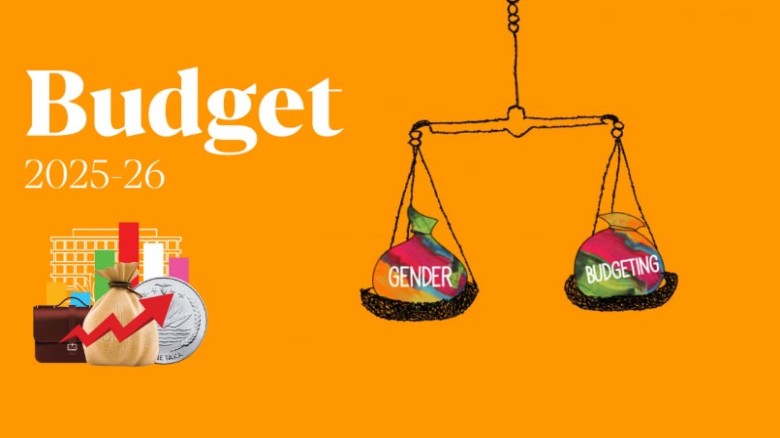

Gender Budget Shrinks in FY2025–26, Raising Concerns Over Women’s Development in Bangladesh
Despite persistent challenges facing women in employment, education, health, and safety, Bangladesh's national budget for FY2025–26 has reduced its allocation for gender equality and women’s development.
Rights groups warn that the rollback could undermine progress and stall the country’s efforts to meet the Sustainable Development Goals (SDGs).
The gender budget for FY2025–26 stands at Tk 260,767 crore, down from Tk 271,818.6 crore in FY2024–25. As a share of the national budget, it has dropped to 33 percent, compared to 34 percent the previous year.
Its proportion of GDP has also decreased to 4.2 percent, down from 4.86 percent, prompting fresh doubts about the government’s commitment to reducing gender disparities across key sectors.
The Ministry of Women and Children Affairs (MoWCA) has seen its allocation cut to Tk 5,078 crore, down from Tk 5,222 crore in the last fiscal year.
Three of the four primary thematic categories of gender-responsive budgeting have experienced reductions:
Women’s Empowerment and Social Status: Tk 62,535.9 crore (down from Tk 64,074.6 crore)
Effective Access to Public Services: Tk 36,177.9 crore (down from Tk 44,054.4 crore)
Education, Health, and Wellbeing: Tk 82,867.7 crore (down from Tk 86,894.4 crore)
Only Economic Participation and Equality saw a modest rise, increasing to Tk 79,185.2 crore, from Tk 76,841.7 crore.
Critics argue the cuts are ill-timed, as women in Bangladesh face severe job losses and declining access to vital services like reproductive healthcare and education.
A recent CPD report revealed that between July and December 2024, 21 lakh jobs were lost—85 percent of them held by women. In the October–December 2024 quarter, women accounted for 92 percent of net job losses.
Overseas job opportunities have also declined. Female migrant worker departures dropped from 8,789 in 2022 to just 4,610 in 2025, according to the Bureau of Manpower, Employment, and Training.
Finance Adviser Salehuddin Ahmed announced a Tk 125 crore special fund for women entrepreneurs in his budget speech. However, experts emphasize that such initiatives require strong implementation mechanisms.
Shahnaz Sumi, director at Bangladesh Nari Pragati Sangha, described the budget cuts as “unfortunate,” noting the lack of recognition for women as farmers and insufficient increases in allowances amid rising living costs.
Concerns were also raised about transparency. Only 16 out of 64 ministries submitted detailed gender budget reports this year—a significant drop from 44 ministries in FY2023–24.
Maheen Sultan, a member of the Women’s Affairs Reforms Commission, expressed concern over reduced funding for MoWCA and gender-focused programs.
Asked whether the commission’s recommendations can be implemented, she replied, “Only if the necessary resources are allocated.”

























Write your opinion